Category: AVIATION
Panasonic Avionics develops Innovative, future-focused and proven software

Panasonic Avionics Corporation (Panasonic Avionics), a world leading provider of in-flight engagement and connectivity (IFEC) solutions, has today opened a new software design and development facility in Pune, India. Founded in 1979, Panasonic Avionics delivers engaging experiences that connect airlines with their passengers, revolutionizing the in-flight experience and redefining the value of in-flight engagement and communication (IFEC) systems for a new era of air travel. Over 200 leading airlines across the world have chosen to install Panasonic Avionics’ in-flight engagement, satellite Wi-Fi connectivity, and digital services on their aircraft.
Panasonic Avionics’ new facility in Pune was opened in the presence of Chief Guest, the Honorable Minister of State for Civil Aviation & Cooperation, Shri. Murlidhar Mohol. He was welcomed to the opening ceremony by Mr Ken Sain, Chief Executive Officer of Panasonic Avionics Corporation, and Mr Manish Sharma, Chairman of Panasonic Life Solutions India and South Asia, and Director of Panasonic Avionics India.
Ken Sain, Chief Executive Officer of Panasonic Avionics Corporation, said: “Innovative, future-focused and proven software is at the heart of every IFEC solution that Panasonic Avionics develops, creating a digital channel that enables our airline customers to engage with their passengers more effectively than ever before.
“With its huge number of skilled engineers, and fast-growing aviation sector, India is a natural location for us to invest in for the future of our business, and we look forward to accelerating our software innovation and design capabilities from our new Pune facility.”
Satyen Yadav, Chief Technology Officer of Panasonic Avionics Corporation, said: “Today marks a significant milestone as we embark on a journey to accelerate the delivery of personalized digital experiences for airline passengers. We look forward to delivering cutting-edge software solutions that delight customers both in the region and globally, and to growing our software talent in Pune.”
Manish Sharma, Chairman of Panasonic Life Solutions India and South Asia, and Director, Panasonic Avionics India, said: “India has become synonymous with ‘Capability, when it comes to software talent’. Today, India is providing IT support and IT services to the world and Panasonic has invested in setting up innovation centers and global capability centers to provide high quality services to our other subsidiaries across the world. Panasonic Avionics’ facility in Pune is the latest in our series of investments in India and we are looking to cater to multiple markets and airlines with innovative solutions for in-flight engagement and communication (IFEC).”
The new facility is the first in India dedicated to supporting the development and delivery of IFEC solutions. It is employing over 200 skilled engineers at the point of launch, with growth plans in place to scale the software engineering talent at the facility to support the increasing demand from airlines for IFEC solutions that will deliver personalized experiences for their passengers.
Panasonic Avionics’ new software design and development facility is integral to the company’s strategy of enabling airlines to realize their passenger digital engagement visions by using the most innovative IFEC solutions, supported by best-in-class enterprise software tools that are self-service and designed to lower IFEC solution lifecycle costs.
A range of software will be developed, tested, and sustained in state-of-the-art laboratories throughout the facility to deliver passenger experiences for narrowbody and widebody aircraft that meet airlines’ needs. These include the X Series in-flight entertainment system and digital solutions including airline interactives which enables airlines to create unique seatback passenger experiences, IFEC development support via SDKs (software development kits), and mobile companion apps to name a few.
Ramco Systems announces the launch of Aviation Software 6.0 for smarter aircraft management

Global aviation software specialist, Ramco Systems announced the release of version 6.0 of its Aviation Software – a revolutionary product release designed to transform M&E and MRO operations with AI-driven insights, advanced automation, and seamless integration. An integrated solution with modules for Contracts, Engineering, Planning, Maintenance, Supply Chain Management, Finance, ePUBS and advanced mobility capabilities, Ramco Aviation Software 6.0 is built to handle the challenges of tomorrow
The release introduces many unparalleled features that enable organizations to digitally transform their maintenance execution processes, as well as their management of flight safety, materials and commercials, with some of the key features and modules including:
Sundar Subramanian, Chief Executive Officer, Ramco Systems, said, “The latest version of Ramco Aviation Software 6.0 is a significant milestone in our journey of continuous innovation and commitment to excellence. Along with the advanced capabilities, our specialized Engine MRO solution is a key part of this release, addressing the critical challenges of engine maintenance. By harnessing advanced technology and our domain expertise Ramco Aviation Software 6.0 will enable aviation organizations meet their growing customer demands and stay competitive. We look forward to empowering organizations drive transformation with this game-changing release.”
Manoj Kumar Singh, Chief Customer Officer – Aviation, Aerospace & Defense, Ramco Systems, said, “We are incredibly proud to bring Ramco Aviation Software 6.0 to our customers. Our relentless focus on innovation has helped us build this AI-powered solution that not only addresses the current challenges faced by aviation organizations but also anticipate their future needs. With advanced capabilities such as automated workflows, data-driven decision making, optimized supply chains, and specialized modules like Engine MRO, we believe we are setting new industry standards with Ramco Aviation Software 6.0.”
.Ramco Aviation Software is trusted by 24,000+ users to manage 4,000+ aircraft globally. With 90+ Aviation organizations onboard, Ramco is the solution of choice for top Airlines, 3rd party MROs, large Heli-Operators, leading Defense organizations, and major Urban Air Mobility companies around the world. Available on cloud, Ramco Aviation Suite provides accessibility with ‘Anywhere Apps’, significantly accelerating organizational efficiency and agility. Ramco is changing the paradigm of enterprise software with Artificial Intelligence based solutions, intelligent voice enabled user experience, and advanced features such as digital task cards, offline maintenance capability, conversational chatbots, HUBs and cognitive solutions.
Ramco Systems announces the launch of Aviation Software 6.0 for smarter aircraft management
Global aviation software specialist, Ramco Systems announced the release of version 6.0 of its Aviation Software – a revolutionary product release designed to transform M&E and MRO operations with AI-driven insights, advanced automation, and seamless integration. An integrated solution with modules for Contracts, Engineering, Planning, Maintenance, Supply Chain Management, Finance, ePUBS and advanced mobility capabilities, Ramco Aviation Software 6.0 is built to handle the challenges of tomorrow
The release introduces many unparalleled features that enable organizations to digitally transform their maintenance execution processes, as well as their management of flight safety, materials and commercials, with some of the key features and modules including:
Sundar Subramanian, Chief Executive Officer, Ramco Systems, said, “The latest version of Ramco Aviation Software 6.0 is a significant milestone in our journey of continuous innovation and commitment to excellence. Along with the advanced capabilities, our specialized Engine MRO solution is a key part of this release, addressing the critical challenges of engine maintenance. By harnessing advanced technology and our domain expertise Ramco Aviation Software 6.0 will enable aviation organizations meet their growing customer demands and stay competitive. We look forward to empowering organizations drive transformation with this game-changing release.”
Manoj Kumar Singh, Chief Customer Officer – Aviation, Aerospace & Defense, Ramco Systems, said, “We are incredibly proud to bring Ramco Aviation Software 6.0 to our customers. Our relentless focus on innovation has helped us build this AI-powered solution that not only addresses the current challenges faced by aviation organizations but also anticipate their future needs. With advanced capabilities such as automated workflows, data-driven decision making, optimized supply chains, and specialized modules like Engine MRO, we believe we are setting new industry standards with Ramco Aviation Software 6.0.”
.Ramco Aviation Software is trusted by 24,000+ users to manage 4,000+ aircraft globally. With 90+ Aviation organizations onboard, Ramco is the solution of choice for top Airlines, 3rd party MROs, large Heli-Operators, leading Defense organizations, and major Urban Air Mobility companies around the world. Available on cloud, Ramco Aviation Suite provides accessibility with ‘Anywhere Apps’, significantly accelerating organizational efficiency and agility. Ramco is changing the paradigm of enterprise software with Artificial Intelligence based solutions, intelligent voice enabled user experience, and advanced features such as digital task cards, offline maintenance capability, conversational chatbots, HUBs and cognitive solutions.
Danfoss joins First Movers Coalition and commits to drive global development of sustainable aluminum

The World Economic Forum has announced that Danfoss has joined the First Movers Coalition (FMC), a global coalition to decarbonize hard-to-abate industries. Danfoss joins the FMC aluminum sector, committing that at least 10% (by volume) of all the company’s primary aluminum procured per year will be low carbon by 2030. Additionally, Danfoss commits to ensuring that at least 50% of all aluminum used annually is composed of secondary aluminum by 2030.
As a member of the FMC, Danfoss joins a group of industry players harnessing purchasing power to create a market for low-carbon aluminum, sending a strong market demand signal for the emerging technologies essential for a net-zero transition. This commitment by members focuses on creating a sustainable value chain for aluminum and achieving a 50% reduction in CO2 emissions from primary aluminum production by 2050. Danfoss has already entered into negotiations and begun contractual agreements with suppliers for low-carbon aluminum.
Ravichandran Purushothaman, President, Danfoss India Region says: “As a sustainable organization serving the world’s energy efficiency needs for 9 decades now, joining FMC is a testimony of Danfoss’ strong commitment towards decarbonization and sustainability at the global level. This development could be an inspiration for Indian manufacturing sector, industry bodies and the govt., for a consortium on this line that will drive the economy of scale for procurement and localization of netzero solutions and make them affordable as well as accessible across value chains. The initiatives like FMC will accelerate India’s net-zero transformation for a greener and sustainable tomorrow.”
Led by the World Economic Forum and the US Government, the FMC targets hard-to-abate sectors including aluminum, aviation, chemicals, concrete, shipping, steel, and trucking, which are responsible for 30% of global emissions. For these sectors to decarbonize at the speed needed to keep the planet on a 1.5-degree pathway, they require low-carbon technologies that are not yet competitive with current carbon-intensive solutions.
Jürgen Fischer, President, Danfoss Climate Solutions, says: “Our customers are increasingly demanding products with a lower carbon footprint – and they’re right to do so. By joining the First Movers Coalition we are responding to this demand by fostering the critical development of low-carbon aluminum production, and thereby accelerating its entry to market. Being part of the coalition also aligns with our own commitment as a leader in the green transition, to achieve carbon neutrality across Danfoss’ global operations by 2030 and to reduce our value chain emissions by 15% by 2030.”
FMC member companies commit to purchasing a percentage of near-zero or zero-carbon solutions from suppliers, which may come at a premium cost. If a critical mass of global companies commits a certain percentage of their future purchasing to clean technologies in this decade, this will create a market tipping point that will accelerate their affordability and drive long-term, net-zero transformation across industrial value chains. The FMC is currently composed of 82 members, all global players in their markets.
Rob van Riet, Interim Head, First Movers Coalition, said: “We are thrilled to welcome Danfoss to the First Movers Coalition, and are eager to work together towards the scaling up of the low-carbon aluminum market globally. Our joint focus will be on surfacing solutions to decarbonize aluminum and accelerate their deployment with committed organizations like Danfoss, aiming to bring these solutions to commercial scale.”
The aluminum industry generates approximately 2% of global emissions but it also has the strongest potential to become carbon negative by 2050. Switching to low-carbon electricity is the biggest step the industry can take to deliver a sector compatible with net zero targets
Aviation Market Size to grow by USD 438.72 billion from 2022 to 2027

The Aviation Market size is estimated to increase by USD 438.72 billion, decline at a CAGR of 6.2% 2022 to 2027. Enhancing airlines’ efficiency drives the growth of the aviation market during the forecast period. Improved aircraft utilization emerges as a primary contributor to increased energy efficiency within the aircraft sector.
This advancement is evidenced by the increased average number of passengers and cargo weight per flight, leading to a reduction in energy consumption per unit of service provided. Moreover, upgrading fleets serves as another catalyst in augmenting efficiency levels. In order to align with global climate targets, the aviation sector must strive for an annual energy efficiency improvement exceeding 3% by 2040. Several existing infrastructural elements pave the way towards achieving these objectives.
Furthermore, the implementation of policy measures, such as carbon pricing and more stringent efficiency standards, is anticipated to increase the market growth during the forecast period. Discover some insights on market size historic period (2017 to 2021) and Forecast (2023 to 2027) before buying the full report
Global Aviation Market – Company Analysis
Company Landscape – The global aviation market is fragmented, with the presence of several global as well as regional companies. A few prominent companies that offer aviation in the market are Airbus SE, BAE Systems Plc, Bombardier Inc., DAHER, Dassault Aviation SA, Embraer SA, General Dynamics Corp., General Electric Co., Leonardo Spa, Lockheed Martin Corp., Northrop Grumman Systems Corp., Pilatus Aircraft Ltd., Raytheon Technologies Corp., Rolls Royce Holdings Plc, Saab AB, Safran SA, Textron Inc., Thales Group, The Boeing Co., and United Aircraft Corp
Changi Airport Group Names India-headquartered Airline IndiGo

Changi Airport Group (CAG) has accorded India-headquartered airline IndiGo its Partner of the Year award at the Changi Airline Awards 2025 (CAA). The annual event held at the Ritz-Carlton, Millenia Singapore, honours airline and aviation partners that have contributed to the development of the Changi air hub. The accolade presented to IndiGo is in recognition of the airline’s remarkable growth at Changi Airport since its commencement of Singapore services in 2011. During this time, IndiGo has risen to become Changi’s fifth largest foreign carrier by passenger traffic.
As a key partner, IndiGo has collaborated closely with CAG and contributed significantly to boosting connectivity between India and Singapore. IndiGo now operates 75 weekly services between India and Singapore, which is 53% more compared to pre-Covid levels. It has also seen a 64% rise in passenger traffic over the past year, carrying over 1 million passengers to and through Changi Airport in 2024.
Presently, the airline connects nine Indian cities to Singapore – Bhubaneswar, Bengaluru, Mumbai, Kolkata, Coimbatore, New Delhi, Hyderabad, Chennai and Tiruchirappalli. Singapore is now IndiGo’s third largest international destination.
Besides direct services to Singapore, IndiGo has, through its codeshare partnership with Qantas, facilitated seamless connectivity between India and Australia via Changi. IndiGo also partnered CAG on a joint marketing campaign to promote its new Coimbatore-Singapore route, as well as the Singapore Tourism Board to promote Singapore as a destination to India travellers through trade engagement and marketing efforts.
Mr Vinay Malhotra, Head of Global Sales, IndiGo said, “At IndiGo, we are truly humbled to receive the ‘Partner of the Year’ award at Changi Airline Awards 2025. This recognition validates our dedication to growth and partnership with Changi Airport Group. Since 2011, we’ve expanded significantly, now operating over 70 weekly flights connecting Singapore to nine cities in India. Our collaboration with Changi Airport has been pivotal in boosting traffic not only between India and Singapore but also beyond, with our codeshare partnerships offering convenient connections to our customers via Changi Airport. IndiGo is committed to strengthening this partnership with Changi Airport even further, delivering hassle-free travel experiences to our customers.”
Speaking at the event, Chief Executive Officer of CAG, Mr Yam Kum Weng stated, “This past year has been a breakthrough year for Changi Airport. For the first time, our passenger traffic over a 12-month period has exceeded pre-Covid levels and reached an all-time high of 68.4 million. During the year, we welcomed seven new passenger airlines to the Changi family and added 20 new city links to Changi’s network. Changi is now linked to some 170 cities by about 100 airlines with over 7,200 weekly flights, firmly positioning us among the world’s busiest international airports.”
Passenger traffic between India and Singapore has surpassed 2023 traffic by 12% and pre-Covid levels by 15%. Today, Changi stands as one of the most connected airports to India in Southeast Asia, reflecting the deepening ties and growing demand between the two nations.
Honouring Top Carriers and Partners at Changi
At the 18th edition of the awards ceremony, a total of 25 awards were presented across several key categories, including Top Airlines by Passenger Carriage and Cargo Carriage, Top Airlines by Absolute Passenger Growth and Absolute Cargo Growth, Best Airline Marketing, and Partner of the Year. These awards celebrate the airline partners whose performance has driven the growth of both passenger and air freight traffic at Changi Airport.
Singapore Changi Airport receives the highest award as the World’s Best Airport 2025

Singapore Changi Airport, which welcomed approximately 67.7 million passenger movements in 2024, has been named the World’s Best Airport 2025 at the prestigious Skytrax World Airport Awards, held during the Passenger Terminal EXPO in Madrid. This marks the 13th time Changi Airport has earned this prestigious honour, reaffirming its position as a world-cl-ass aviation hub renowned for innovation, service excellence, and passenger comfort. In addition to the top accolade, Changi also won awards for the World’s Best Airport Dining, World’s Best Airport Washrooms, and Best Airport in Asia — bringing its total tally to over 690 airport awards to date.
Mr. Yam Kum Weng, Chief Executive Officer of Changi Airport Group, said: “Changi Airport is honoured to be named by Skytrax as the World’s Best Airport for the 13th time. It is indeed gratifying to receive this recognition, and this certainly encourages us to continue to strive to provide the best travel experience. We thank all our passengers for their vote of confidence. And we’re especially grateful to the Changi Airport community, whose unwavering commitment to service excellence has made this award possible. As air travel continues to grow, we look forward to welcoming passengers to experience the magic at Changi Airport.”
Commenting on the achievement, Mr Edward Plaisted, CEO of Skytrax, said: “It is a great achievement for Singapore Changi Airport to receive the highest award as the World’s Best Airport 2025, this being a record-breaking 13th time in the awards history that they have scooped this award. The diversity and expansive choice of dining outlets is also recognised with Changi Airport winning the award for the World’s Best Airport Dining. With washrooms being a major driver of customer satisfaction during their airport experience, we congratulate Singapore Changi Airport on receiving the first ever World’s Best Airport Washrooms award.”
Enhanced Global Connectivity
In 2024, Changi welcomed eight new passenger airlines to the Changi family, including Aero Dili, AirAsia Cambodia, Air Canada, Air Japan, Loong Air, Peach Aviation, Tianjin Airlines and West Air. It also added 11 new passenger city links to its growing network, connecting Singapore to Broome, Brussels, Guiyang, Kertajati, Lhasa, Linyi, Malacca, Phu Quoc, Quanzhou, Vancouver, and Wenzhou, enhancing Changi’s strategic position as a major transit and destination hub.
Driven by travel demand from across the Asia-Pacific and beyond, North Asia remained one of the fastest-growing regions, with traffic up by 40% as compared to 2023. Changi’s top-performing markets for the year were China, Indonesia, Malaysia, Australia and Thailand.
Stronger India Links: Passenger Traffic at Historic High
Passenger traffic between Singapore and India is at a historic high, registering 5.5 million passenger movements in 2024, up 12% compared to 2023 and surpassing pre-pandemic (2019) traffic by 15%. This also marked the first year annual passenger traffic between Singapore and India crossed the 5 million mark.
India is currently Changi’s top sixth market. At present, Changi Airport is linked to 16 Indian cities, including major hubs such as Delhi, Mumbai, Bengaluru and Hyderabad, with six airlines (Air India, Air India Express, DrukAir, IndiGo, Scoot and Singapore Airlines) providing approximately 280 weekly services between the two countries.
Changi Airport remains one of the most connected hubs in Southeast Asia to India. In its effort to continue to build on this momentum, Changi aims to further expand its connectivity to other cities in India including Jaipur, Lucknow, Surat, and Chandigarh in the near- to mid-term.
Enhancing Experiences & Amenities for Indian Travellers
In addition to its lush gardens, unique attractions and relaxing and thoughtful amenities, Changi continues to enhance offerings for Indian travellers, which are a growing visitor group for the airport.
- The Free Singapore Tour offered to passengers with at least 5.5 hours of transit time is a standout complimentary experience available at Changi Airport. Indian travellers are among the top 3 nationalities of travellers who enjoy this 2.5 hour guided tour. Running six times a day, the tours feature refreshed itineraries—including the newly introduced Singapore River and Marina Bay Sands Tour—giving transit passengers an enriching glimpse into Singapore’s vibrant cultural heritage and iconic attractions.
- The Shop & Dine Privileges at Changi Airport continues to be a crowd favourite with Indian travellers, allowing them to redeem up to $20 worth of Changi vouchers, which can be used at dining and retail outlets across the airport’s four terminals.
The Indian aviation sector in 2023 reflects a sector that has navigated challenges with resilience
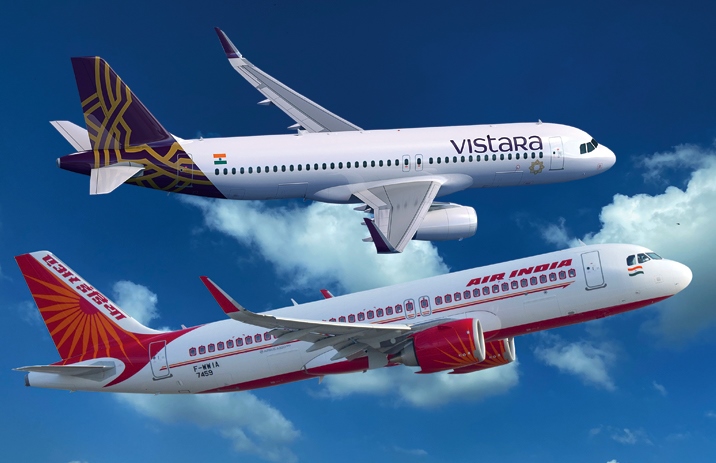
The year 2023 witnessed several notable developments and achievements in the Indian aviation sector, reflecting its resilience and adaptability amid global challenges. Despite ongoing challenges posed by the global pandemic, Indian airlines continued to navigate the complexities, gradually recovering and adapting to the evolving travel landscape. Introduction of new routes and expansion of services to enhance connectivity within the country and internationally.
The aviation sector also integrated advanced technologies to streamline operations, enhance passenger experience, and ensure safety. There was a lot of adoption of sustainable aviation practices, including fuel-efficient technologies and eco-friendly initiatives. The year 2023 saw massive progress in airport infrastructure development and modernisation projects across the country.
The Indian aviation sector in 2023 reflects a sector that has navigated challenges with resilience and has positioned itself for continued growth and development in the years to come.
IIT M, Zuppa Geo Navigation Tech & India Air Force’s 8 BRD Forge MoU
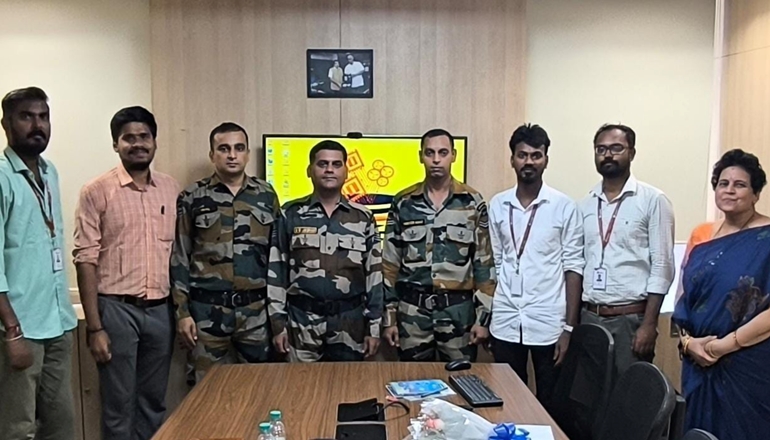
Zuppa Geo Navigation Technologies, IIT Madras, Zuppa Geo Navigation Technologies, and Indian Air Force’s 8 BRD Forge MoU IIT Madras, and the 8 Base Repair Depot (8 BRD) of the Indian Air Force have signed a Memorandum of Understanding (MoU) to jointly undertake in-house Research & Development (iR&D) in defense technologies. This collaboration marks an important milestone in strengthening self-reliance (Atmanirbhar Bharat) in the defense sector by bringing together complementary strengths from industry, academia, and the armed forces.
The tripartite partnership leverages the deep-tech expertise of Zuppa Geo Navigation Technologies in UAVs and navigation systems; the renowned research and innovation ecosystem of IIT Madras, and; the operational experience and domain knowledge of the Indian Air Force’s 8 BRD.
Commenting on this collaboration, Sai Pattabiram, Founder & Managing Director at Zuppa said, “This MoU represents the convergence of industry innovation, academic excellence, and operational defense experience. By aligning with IIT Madras and the Indian Air Force, we aim to create next-generation UAV and navigation solutions that will serve the nation’s defense with indigenous strength and global benchmarks.“
Together, the three partners will focus on developing cutting-edge indigenous solutions that enhance operational efficiency, autonomy, and resilience in defense aviation and related systems. The initiative aims to accelerate the co-creation of advanced technologies adaptable to the evolving requirements of the Indian Air Force, while also contributing to India’s strategic independence in critical defense technologies.
This partnership will enable us to develop practical solutions to the operational challenges we face in the field. By leveraging IIT Madras’ research capabilities and Zuppa’s proven technology expertise in real-world applications, we can enhance our preparedness and self-reliance in key areas. It also exemplifies the role of academia in nation-building.
Zuppa is a deep-tech drone intelligence company headquartered in India, specializing in autonomous aerial platforms and flight control systems. With a focus on precision agriculture, smart logistics, and AI-driven automation, Zuppa’s drone stack integrates proprietary hardware and software designed to operate in challenging real-world conditions. Founded by aerospace engineers and technologists, Zuppa’s vision is to build the future of unmanned flight from India to the world.
AVIATION
Leading global payroll software provider Ramco Systems announced that it has successfully implemented its Payce platf-orm at Air Niugini Limited, the national airline of Papua New Guinea, marking a key achievement in the company’s digital transf-ormation journey. Ramco Payce has replaced Air Niugini’s legacy system for payroll and time and attendance, thereby digitally transf-orming the operations of 2000+ […]